
07
Aug
2026
Is Boomerang or Life360 Better for Tracking a Teenager’s Location?
August 7, 2026
Wondering is boomerang or life360 better for tracking a teenager’s location? Compare GPS features, geofencing, and digital safety tools for families today.
Table of Contents
- What Are the Core Differences Between the Apps?
- How Do Location Features Compare?
- Why Look Beyond GPS Tracking?
- How to Choose the Right App for Your Teen
- What People Are Asking
- Feature Comparison
- Comprehensive Family Safety Solutions
- Practical Tips for Introducing Location Tracking
Key Takeaway
is boomerang or life360 better for tracking a teenager’s location is a comparison evaluating whether comprehensive digital safety tools or dedicated family GPS apps best serve adolescent monitoring needs. Boomerang pairs real-time location tracking with effective screen time controls, whereas Life360 focuses strictly on mapping and driving habits.
By the Numbers
- 52 percent of U.S. parents of young adults aged 18 to 25 track their child’s location at least occasionally (C.S. Mott Children’s Hospital, 2026)[1].
- 71 percent of parents who use tracking keep the feature turned on constantly rather than situationally (C.S. Mott Children’s Hospital, 2026)[1].
- 58 percent of U.S. parents rely on cell phones with built-in location tracking to monitor whereabouts (Statista, 2024)[2].
Understanding Teen Location Tracking
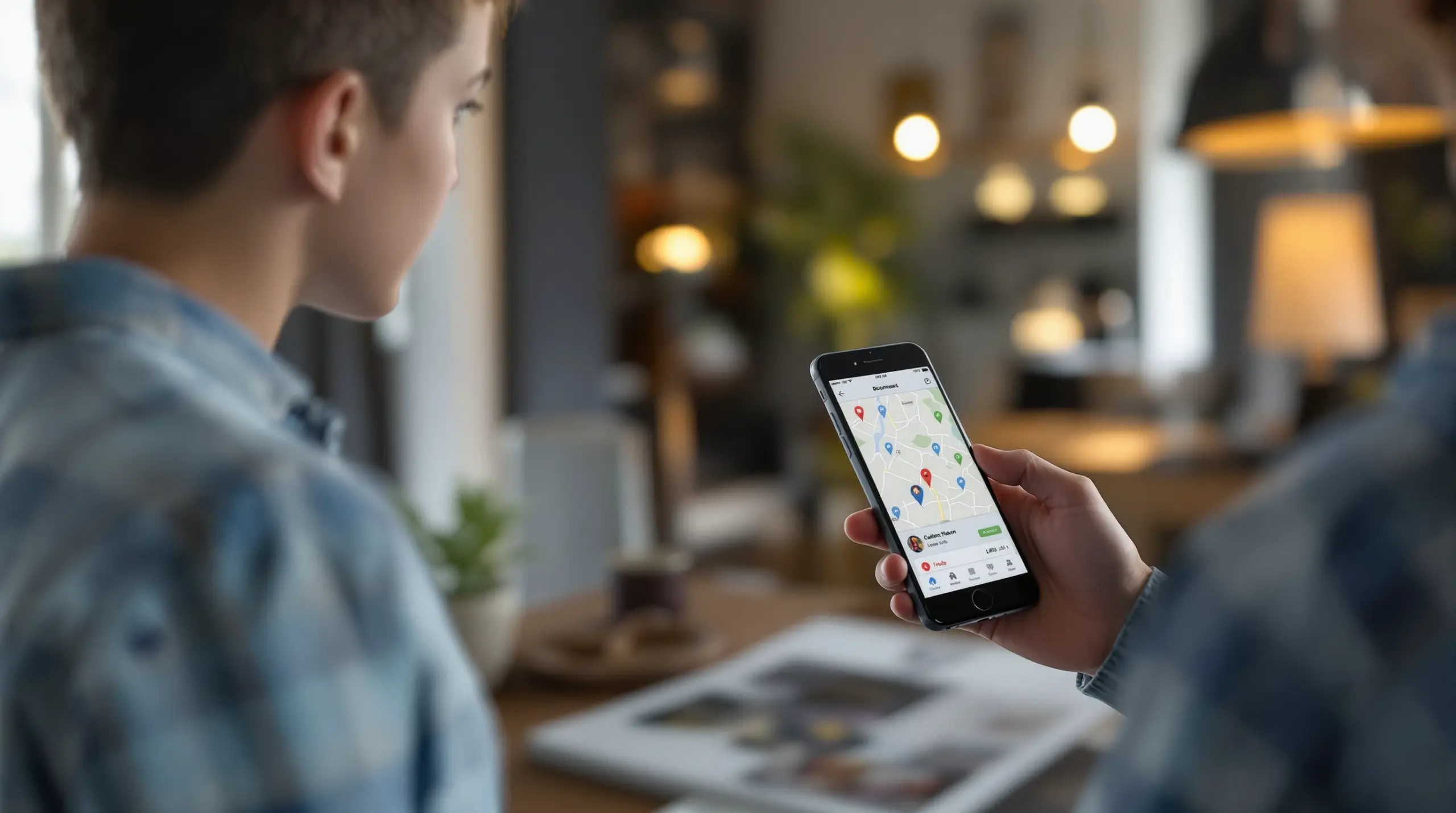
When your child receives their first smartphone, deciding is boomerang or life360 better for tracking a teenager’s location becomes a top priority for modern families. Parents naturally want to ensure physical safety without turning into overbearing helicopters. At Boomerang Parental Control, we understand that finding the right balance between GPS monitoring and overall digital wellness is important for household harmony. While dedicated locator apps offer specific mapping features, comprehensive parental control platforms provide a much wider safety net for growing adolescents.
The widespread adoption of digital location tracking among families shows how quickly surveillance technologies have moved from specialized tools into everyday parenting practices (Domoff et al., 2023)[3]. However, simply knowing where your child is physically does not tell you what they are doing on their device. This guide breaks down the key features, privacy considerations, and everyday usability of both approaches so you can make an informed decision for your family’s unique needs and establish healthy smartphone boundaries.
START YOUR FREE TRIAL
Take control of screen time—free for 14 days, cancel anytime.




What Are the Core Differences Between the Apps?
The fundamental difference between these platforms lies in their primary design philosophy, contrasting a dedicated family locator with a comprehensive digital management suite. When parents ask is boomerang or life360 better for tracking a teenager’s location, they are comparing two entirely different categories of software. Life360 was built from the ground up as a family GPS and driving safety application. Its core value proposition revolves around real-time mapping, driving telemetry, crash detection, and roadside assistance. It excels at answering the question, “Where are they right now, and are they driving safely?”
Boomerang Parental Control, on the other hand, approaches teen safety from a comprehensive mobile device management perspective. While it includes reliable real-time tracking and geofencing, its primary focus is on promoting digital wellness and preventing online risks. Boomerang integrates location data with screen time limits, app blocking, and safe browsing tools. This means you are not just monitoring their physical transit; you are actively guiding their digital habits. Comparing Boomerang and Life360 for teen tracking reveals that one is a specialized map, while the other is a complete parenting toolkit.
The target demographics also differ slightly. Life360 is heavily marketed toward families with multiple drivers, making it highly relevant for older teenagers who have just received their driver’s licenses. Boomerang is specifically optimized for pre-teens and younger teens receiving their first Android devices. Our platform addresses the foundational challenges all parents face when managing a connected child, ensuring that location tracking is just one piece of a broader online safety strategy. Choosing between Boomerang and Life360 ultimately depends on whether your primary anxiety is behind the wheel or behind the screen.
How Do Location Features Compare?
Real-time GPS accuracy and geofencing capabilities form the backbone of any reliable teen monitoring strategy, but the execution varies significantly between platforms. Both applications offer reliable real-time tracking that allows parents to view their child’s current position on a map. However, the depth of location history and the flexibility of safe zones distinguish the two services. Boomerang provides up to 30 days of location history, allowing parents to review past movements and verify where their child spent their afternoon without needing to interrogate them.
Geofencing is another critical feature for modern parents. Both apps allow you to draw digital boundaries around specific locations like school, home, or a friend’s house. When your teen enters or leaves these safe zones, you receive an automatic alert. This passive confirmation eliminates the need for constant check-in text messages and reduces family friction. If you are evaluating Boomerang vs Life360 for location monitoring, both handle these basic geofencing alerts competently. However, Life360 offers more granular driving-specific alerts, such as speed monitoring and hard braking notifications, which Boomerang does not include.
The hardware setup is also important to consider. Boomerang is an Android-first solution, meaning its deepest integrations, including uninstall protection and background location persistence, are optimized for Android devices. iOS monitoring is available but limited by Apple’s strict privacy restrictions. Life360 operates more uniformly across both operating systems because it relies on standard GPS polling rather than deep system-level integrations. For families with teenagers who are highly tech-savvy and prone to turning off their GPS, Boomerang’s Android-specific uninstall protection ensures the location tracking remains active and cannot be easily bypassed or deleted.
Why Look Beyond GPS Tracking?
Relying solely on a GPS map ignores the vast digital space where teenagers spend the majority of their waking hours. Physical safety is only half the battle; digital safety is equally critical in modern connected environments. A teenager sits safely in their bedroom but remains exposed to cyberbullying, inappropriate content, or predatory contacts through their smartphone. This is where the distinction between a simple family locator and a comprehensive parental control app becomes starkly apparent.
Location tracking gives parents peace of mind and helps in emergencies, but it also shifts into surveillance if parents aren’t talking with their young adult children about why and how they’re being tracked (Radesky, 2026)[4]. To prevent this surveillance feeling, parents must pair location tracking with tools that teach digital responsibility. Boomerang offers automated screen time limits and scheduled downtime, ensuring that devices are put away during homework and bedtime. By enforcing these smartphone boundaries automatically, parents remove themselves from the role of the daily enforcer, reducing household conflict.
Boomerang also provides deep visibility into digital activities that a GPS app simply does not see. Features like YouTube App History Monitoring (available on Android) allow parents to see exactly what videos their child is watching. The App Discovery and Approval workflow prevents teenagers from downloading risky new social media platforms without parental consent. When paired with the SPIN Safe Browser – Safe web browsing for Boomerang Parental Control, parents can ensure that web filtering and SafeSearch enforcement are active on any network. Teen location tracking apps compared side-by-side show that comprehensive tools protect the child’s mind and habits, not just their physical coordinates.
How to Choose the Right App for Your Teen
Selecting the ideal monitoring tool requires evaluating your teenager’s maturity level, their device type, and your family’s specific safety concerns. There is no universal answer to is boomerang or life360 better for tracking a teenager’s location because every family operates under different circumstances. If your primary concern is a newly licensed 17-year-old driver driving on busy highways, a dedicated driving and GPS app provides the specific telemetry you need. However, if you are managing a 12-year-old with their first smartphone, their digital vulnerabilities far outweigh their driving risks.
For younger teens and pre-teens, establishing healthy digital habits from day one is paramount. Boomerang acts as a remote control for your child’s Android phone, designed to end screen time arguments and ensure safety. You set the rules, and the phone automatically locks when time is up, promoting sleep and focus. Our platform also addresses the common parental frustration of children circumventing rules. Features like Uninstall Protection and Boomerang Parental Control is the only parental control app to use Samsung’s Knox ensure that the boundaries you set remain firmly in place, even if your child tries to delete the app.
Cost and family size also play a role in the decision-making process. Dedicated GPS apps charge premium monthly fees per family member for advanced features like crash detection. Boomerang offers a consumer-friendly pricing model, including a Family Pack that covers up to 10 child devices on an annual subscription. This makes enterprise-grade mobile device management accessible to everyday families. Ultimately, choosing the right app means looking at the whole child-where they are going, what they are watching, and how much time they are spending online.
What People Are Asking
Does tracking my teenager’s location damage our trust?
Tracking your teenager’s location does not damage trust when parents introduce the app as a safety tool instead of a punitive surveillance measure. Digital location tracking is used by parents as a safety tool, but our findings suggest that teens experience it differently, sometimes feeling monitored rather than protected (Roddey, 2024)[5]. To maintain trust, parents should be completely transparent about the use of tracking apps, explain the safety reasons behind them, and agree on clear boundaries regarding when and how the location data will be used.
Can my teen turn off the location tracking on their phone?
Tech-savvy teenagers easily disable basic built-in tracking, but dedicated apps with uninstall protection prevent them from turning off GPS monitoring. Free tools like Google Family Link or Apple Screen Time are frequently bypassed by adolescents who know how to manipulate device settings. Boomerang uses advanced security features, including Samsung Knox integration on supported Android devices, to make it exceptionally difficult for a child to tamper with or remove the parental control app, ensuring your location tracking remains active and reliable.
Which app uses less battery life for GPS tracking?
Dedicated family locator apps consume more battery life due to constant high-precision GPS polling, while comprehensive parental control apps optimize background tracking. Apps that focus exclusively on real-time mapping and driving telemetry require frequent location pings to maintain accuracy and calculate speed, which drains the battery faster. Comprehensive platforms like Boomerang balance location updates with other background tasks, resulting in a more moderate impact on the child’s daily battery life while still providing accurate geofencing alerts and location history.
Do I need a separate app for screen time and location?
You do not need separate applications if you choose a comprehensive parental control platform that integrates both GPS monitoring and device management. Multiple apps cause software conflicts, drain the battery faster, and create a confusing dashboard for parents. By using a unified solution like Boomerang, parents can manage screen time limits, approve new app installations, filter web content, and track physical location all from a single, centralized parent dashboard, making daily digital parenting much more efficient.
Feature Comparison
Understanding the functional differences between dedicated locators, comprehensive parental controls, and built-in operating system tools is important for making the right choice. Each approach offers distinct advantages depending on whether your priority is driving safety, digital wellness, or basic cost-free monitoring.
| Feature | Boomerang Parental Control | Life360 | Built-in OS Tools |
|---|---|---|---|
| Real-Time GPS Tracking | Yes (Android enhanced) | Yes (High precision) | Yes (Basic) |
| Geofencing Alerts | Yes | Yes | Limited |
| Screen Time Limits | Yes (Automated) | No | Yes (Basic) |
| App Blocking & Approval | Yes (Comprehensive) | No | Limited |
| Uninstall Protection | Yes (Samsung Knox) | No | No |
| Driving Telemetry | No | Yes | No |
As highlighted in a Boomerang Parental Control software review, the integration of screen time management with location tracking provides a more comprehensive approach to teen safety than standalone GPS apps.
Comprehensive Family Safety Solutions
At Boomerang Parental Control, we are dedicated to providing parents with the tools necessary to guide their children toward responsible, balanced, and safe digital citizenship. We believe effective parental control goes beyond simple blocking; it is about promoting dialogue, setting healthy boundaries, and teaching self-management in the digital world. Our platform gives parents comprehensive visibility and control, allowing them to participate actively in their child’s technology use without being overly restrictive or relying solely on GPS mapping.
Our core product, Boomerang Parental Control – Taking the battle out of screen time for Android and iOS, is designed to eliminate daily arguments over device usage. By using automated scheduling and daily limits, the app acts as a neutral enforcer, ensuring that key routines like bedtime and homework time are consistently protected. Our Boomerang Parental Control – screen time features also allow parents to designate educational apps as “Encouraged” for unrestricted use, promoting positive digital habits rather than pure punishment.
For families who need deep device integration to prevent tech-savvy teens from bypassing rules, we offer a direct Sideload download page for Android devices. This installation method activates our most powerful features, including Call and Text Safety monitoring and advanced App Removal Protection. If you are ready to take control of your family’s digital wellness and physical safety, we invite you to explore our solutions and find the peace of mind you deserve.
Practical Tips for Introducing Location Tracking
Introducing location tracking to a teenager requires tact, transparency, and open communication to ensure it builds safety rather than resentment. When parents rely on apps to track their teenagers, it’s important that they pair that technology with open communication and agreed-upon boundaries instead of using tracking as a substitute for trust (Goyal, 2026)[6]. Here are actionable strategies for implementing GPS monitoring successfully in your household.
Establish the “Why” Before the “How”
Before installing any app, sit down with your teenager and explain exactly why you are using location tracking. Frame it strictly as a safety measure for emergencies, not as a way to spy on their social life. Assure them that you will not use the app to track their every move unless there is a genuine safety concern or they fail to respond to calls during an emergency.
Create a Family Media Agreement
Draft a written agreement that outlines the rules for smartphone usage, including location tracking, screen time limits, and app downloads. Have both you and your teen sign it. This agreement should also include privacy boundaries, such as a promise that you will not read their private text messages without a severe safety reason, building mutual respect and digital accountability.
Review and Adjust as They Mature
A 12-year-old requires vastly different supervision than a 16-year-old. As your teenager shows responsibility, good judgment, and adherence to your family rules, gradually loosen the digital restrictions. You transition from strict daily screen time limits to simple bedtime schedules, or reduce the frequency of location check-ins, rewarding their maturity with increased digital independence.
Before You Go
The debate over is boomerang or life360 better for tracking a teenager’s location ultimately comes down to your family’s specific priorities. If your sole concern is monitoring a teen driver, a dedicated GPS app serves that narrow purpose well. However, if you want to protect your child from online risks, manage their screen time, and ensure their physical safety all in one place, a comprehensive parental control platform is the superior choice. Boomerang provides the strong Android-first tools necessary to guide your child toward healthy digital citizenship while keeping them safe in the real world.
Do not wait for a digital crisis to occur before taking action. Visit our website to explore our features, or reach out to our team directly at [email protected] to learn more about how we can support your family’s digital wellness today.
Sources & Citations
- Safety or surveillance: Tracking of young adults. C.S. Mott Children’s Hospital National Poll on Children’s Health.
https://mottpoll.org/reports/safety-or-surveillance-tracking-young-adults - Parents in the United States: Tools used to track kids. Statista.
https://www.statista.com/statistics/1536170/parents-united-states-tools-used-to-track-kids/ - Digital Location Tracking: A Preliminary Investigation of Parents and Adolescents. PMC.
https://pmc.ncbi.nlm.nih.gov/articles/PMC10238636/ - Digital Location Tracking of Children and Adolescents. PMC.
https://pmc.ncbi.nlm.nih.gov/articles/PMC11843666/
START YOUR FREE TRIAL
Take control of screen time—free for 14 days, cancel anytime.
