
08
Jul
2026
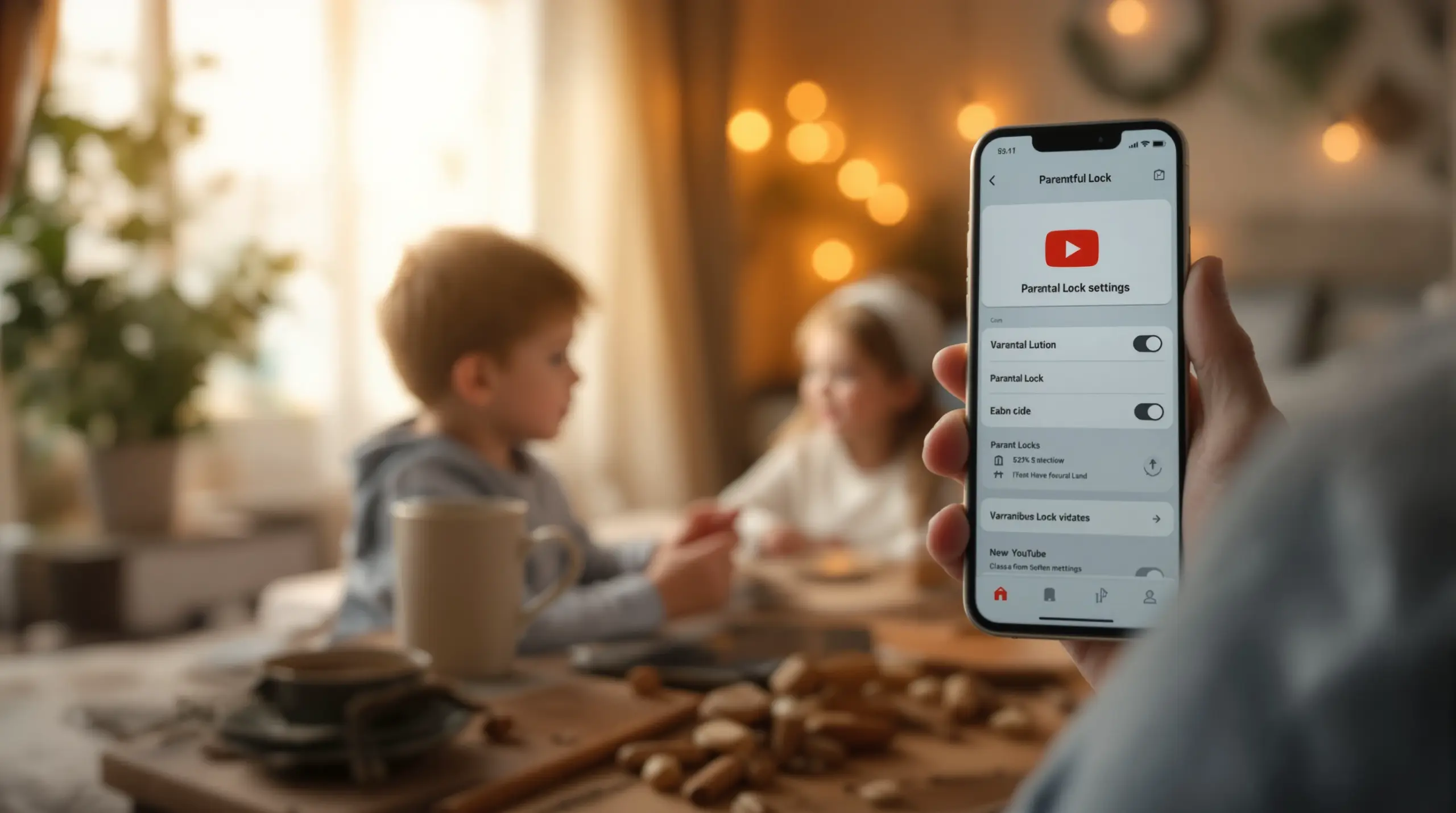
Parental Lock on YouTube App: A Parent’s Guide
July 8, 2026
Setting a parental lock on YouTube app protects your child from inappropriate content – discover the most effective methods for Android and iOS devices, from Restricted Mode to full app controls.
Table of Contents
- What Is a Parental Lock on YouTube App?
- Built-In YouTube Controls: Restricted Mode and YouTube Kids
- Advanced Android Controls for YouTube
- The Real Limitations of YouTube’s Built-In Controls
- Frequently Asked Questions
- Comparing YouTube Parental Control Approaches
- How Boomerang Parental Control Helps
- Practical Tips for Managing YouTube Safely
- The Bottom Line
- Sources & Citations
Article Snapshot
A parental lock on YouTube app is a set of controls that restricts what children can watch, search, and access within YouTube. Options range from YouTube’s own Restricted Mode and YouTube Kids profiles to third-party apps that monitor history, enforce time limits, and prevent bypass on Android devices.
By the Numbers
- US children ages 2-12 averaged 1 hour 48 minutes of YouTube viewing per day in 2024 (Kids360 blog citing Statista, 2024)[1]
- YouTube Kids offers 4 content settings for supervised profiles, including an option for parents to approve content themselves (Google Help, 2026)[2]
- Independent parental-control guidance describes 3 content tiers available through YouTube supervised accounts (Internet Matters, 2026)[3]
- The entry-level supervised content tier is designed for children aged 9 and older, with the next tier stepping up at age 13 (Internet Matters, 2026)[3]
What Is a Parental Lock on YouTube App?
A parental lock on YouTube app is any control – built into YouTube or applied through a third-party tool – that limits what your child can view, search, and do inside the YouTube application. The need is real: US children ages 2 to 12 were averaging 1 hour 48 minutes of YouTube viewing every day in 2024 (Kids360 blog citing Statista, 2024)[1], and the platform’s algorithm is designed to keep viewers watching, not to protect young audiences. Boomerang Parental Control was built with exactly this challenge in mind, providing parents with visibility into YouTube viewing history on Android and the ability to enforce time limits across all apps.
Parents searching for a YouTube content lock are responding to one of two situations: they discovered their child watching something age-inappropriate, or they want to prevent that moment from happening in the first place. Both goals are valid, and the right combination of controls depends on your child’s age, the device they use, and how technically capable they are at finding workarounds.
START YOUR FREE TRIAL
Take control of screen time—free for 14 days, cancel anytime.



There are three broad approaches families use. The first is YouTube’s own built-in tools – Restricted Mode and YouTube Kids profiles. The second is device-level controls like screen time management and app blocking. The third is a dedicated parental control app that combines monitoring, enforcement, and tamper protection in a single platform. Each approach has real strengths, and each has real gaps. Understanding those gaps is important before you decide which method to trust with your child’s safety.
This guide covers all three approaches honestly, explains what each one can and cannot do, and helps you choose the combination that fits your family. We focus particularly on Android, where the deepest controls are available, while also noting what iOS parents can and cannot access.
Built-In YouTube Controls: Restricted Mode and YouTube Kids
YouTube provides two primary built-in tools for parents: Restricted Mode on the standard YouTube app and the dedicated YouTube Kids app with its profile-based content settings. Both are worth understanding before you layer additional controls on top of them.
Restricted Mode on the Standard YouTube App
Restricted Mode is a filter you enable inside the YouTube app or in a browser that attempts to hide content flagged as inappropriate for general audiences. Enabling it takes a few steps: open YouTube, tap your profile picture, go to Settings, and toggle Restricted Mode on. In a browser, you can also choose to “Lock Restricted Mode on this browser” (Screen Time, 2026)[4] to prevent your child from simply switching it off.
The limitation is significant. Restricted Mode relies on YouTube’s own content tagging system. It filters out a large amount of mature content, but it does not catch everything – videos that haven’t been flagged or reviewed appear under Restricted Mode. More importantly, a child who knows their way around settings can turn Restricted Mode off unless you lock it with a separate Google account or a third-party tool. On a shared family device, that protection is especially fragile.
YouTube Kids and Supervised Profiles
YouTube Kids is a separate app designed for younger children. It gives parents four content settings for supervised profiles, including the option to approve content themselves (Google Help, 2026)[2]. According to Google Help’s support documentation, parents can “Select Preschool, Younger, Older, or Approve content yourself” when configuring a profile (Google Help, 2026)[2]. To adjust these settings, you navigate to YouTube Kids Settings and, as documented by Google Help, “select EDIT next to ‘Content Settings'” (Google Help, 2026)[2].
For older children who have graduated from YouTube Kids to the main app, supervised accounts through Google Family Link offer a middle ground. Independent children’s online safety organization Internet Matters describes the supervised account content levels this way: the entry tier covers content suitable for those “Explore: for those 9+” (Internet Matters, 2026)[3], while the broadest setting is “Most of YouTube: most content on YouTube except if marked as 18+” (Internet Matters, 2026)[3].
YouTube Kids and supervised profiles are genuinely useful starting points, particularly for younger children. They work well when a child is cooperative and not actively seeking workarounds. For pre-teens and teenagers, though, these tools are often the first thing kids figure out how to get around – which is exactly why many parents end up looking for something stronger.
Advanced Android Controls for YouTube
Android devices give parents significantly deeper control over YouTube than iOS, making them the better platform for families who want real enforcement rather than advisory filters. The gap between what’s possible on Android and what’s available on iOS is worth understanding clearly before you commit to a solution.
YouTube App History Monitoring on Android
One of the most requested features among parents is the ability to see what their child has actually been watching on YouTube – not just what’s blocked, but what gets through. On Android, Boomerang Parental Control – Taking the battle out of screen time for Android and iOS provides YouTube App History Monitoring, giving parents a clear view of their child’s search terms and viewed content within the standard YouTube application. This feature is Android-only and is not available on iOS devices.
This matters because restricted settings and filtered profiles don’t guarantee zero exposure to concerning content. Visibility into watch history lets you have specific, informed conversations with your child rather than reacting to vague worries. You can spot patterns – a sudden interest in violent gaming content, repeated searches for adult themes – before they become serious concerns.
Per-App Time Limits for YouTube on Android
Beyond visibility, Android parents can set per-app time limits that apply specifically to YouTube. Rather than giving a child a general daily screen time budget that they can spend entirely on YouTube, you can allocate a specific allowance – say, 30 minutes for YouTube – while keeping separate limits for other apps. Boomerang Parental Control – screen time features includes this per-app control as an Android-exclusive feature.
Combining a daily YouTube time limit with YouTube Kids or Restricted Mode creates a layered defense: content filtering reduces what your child can find, while time limits reduce how long they can look. Neither control alone is sufficient, but together they address both quality and quantity of YouTube use.
App Blocking and Approval on Android
For parents who want to block YouTube entirely during certain hours – homework time, mealtimes, after 9 PM – Android app blocking provides that control. Scheduled downtime can lock YouTube alongside all non-essential apps on a timed basis, removing the need for you to manually intervene every evening. The App Discovery and Approval feature also means your child cannot install a second YouTube-adjacent app (like a third-party video browser) without your explicit permission, closing a common workaround.
On iOS, Boomerang’s controls are more limited. Screen time scheduling is available, and location tracking works on both platforms, but the per-app limits, YouTube history monitoring, and keyword alerts described in this section are Android-only capabilities. iOS parents should check Boomerang Parental Control software review on TechRadar for a platform-by-platform breakdown of what each device supports.
The Real Limitations of YouTube’s Built-In Controls
YouTube’s native parental controls are a reasonable starting point, but they have well-documented limitations that parents need to understand before relying on them as a complete solution. Recognizing these gaps is the first step toward building a protection strategy that actually holds.
Restricted Mode Is Not a Hard Lock
Restricted Mode filters content based on YouTube’s own moderation system, which is imperfect and inconsistently applied. A video that has not been flagged by the community or reviewed by YouTube’s systems appears under Restricted Mode. Parents who trust Restricted Mode as a complete solution often discover this the hard way. It is best understood as a first filter, not a firewall.
More practically, Restricted Mode can be turned off by any user who has access to the app’s settings. On a child’s personal device, this is a trivial step for any child over the age of about eight. Locking Restricted Mode to a specific Google account adds a layer, but a determined child can log out and log back in with a different account – or simply use a browser on another device.
YouTube Kids Has an Age Ceiling
YouTube Kids works well for children under ten, but many parents find their pre-teen pushes back hard against it. The app looks noticeably different from the standard YouTube experience their peers are using, and social pressure to use the “real” YouTube is real. Once a child moves to the main app – even on a supervised account – the content exposure gap widens considerably.
Supervised Accounts Require a Consistent Google Login
Family Link supervised accounts only work when the child is signed in with their supervised Google account. If a child logs out, uses a guest profile, or accesses YouTube through a browser instead of the app, the supervised account controls don’t apply. This is a structural limitation of account-based parental controls: they protect a login, not a device.
A device-level control – enforced by a parental control app with uninstall protection – addresses this gap because the rules apply to the device regardless of which account is active. On Android, Boomerang’s Uninstall Protection, including Samsung Knox integration for enterprise-grade device security on supported devices, makes it extremely difficult for a child to remove or bypass the app. That’s the difference between a rule that protects an account and a rule that protects a device. For a detailed independent perspective on how these protections stack up, SafeWise’s Boomerang Parental Control review covers real-world performance across platforms.
Your Most Common Questions
How do I set a parental lock on YouTube app without YouTube Kids?
If your child is old enough for the standard YouTube app but you still want content filtering in place, you have a few options outside of YouTube Kids. The first is to enable Restricted Mode inside the YouTube app and lock it to your Google account so your child cannot turn it off. This limits access to flagged adult content but does not block everything inappropriate.
The second option is to set up a Google Family Link supervised account for your child. Through Family Link, you can configure YouTube content tiers – from the entry level designed for children 9 and older up to broader access for teens – and you maintain oversight over the settings. This is more structured than Restricted Mode alone.
The most effective approach for Android users is to combine a supervised account or Restricted Mode with a dedicated parental control app that enforces device-level rules. On Android, Boomerang Parental Control adds YouTube App History Monitoring so you can see what your child watches, and per-app time limits so you can cap daily YouTube usage at a specific amount. These controls work at the device level rather than the account level, meaning they apply even if your child tries to switch Google accounts.
For iOS, options are more limited. Apple’s Screen Time can block the YouTube app entirely or apply downtime schedules, but per-app YouTube monitoring is not available at the same depth as Android. Pairing Apple Screen Time with a content-filtering browser like SPIN Safe Browser adds another layer of protection for web-based YouTube access.
Can my child bypass a parental lock on YouTube app?
Yes, and many children – especially those over ten – do find workarounds for basic YouTube restrictions. The most common bypasses include logging out of a supervised Google account and logging into a personal or secondary account, accessing YouTube through a browser instead of the app (bypassing app-level controls entirely), using a friend’s device, or simply uninstalling a parental control app that lacks tamper protection.
Restricted Mode is easy to disable for any child who knows where to look in YouTube’s settings. Google Family Link supervised accounts are stronger, but they only apply when the child is actively signed in with their supervised account on the device.
The most bypass-resistant approach on Android is a parental control app with genuine uninstall protection. Boomerang Parental Control includes Uninstall Protection as a core feature, and on Samsung devices, Samsung Knox integration makes the app extremely difficult to remove without the parent’s PIN. This is a key differentiator from free tools like Google Family Link, which children as young as eleven have reliably bypassed. For iOS, the equivalent is enabling Guided Access or Screen Time with a passcode your child does not know, but device-level enforcement on iOS is generally less strong than Android.
The practical advice for parents is to layer your controls: use YouTube’s own restrictions as a first filter, apply device-level time limits and app blocking, and choose a parental control app with verified tamper protection for the device your child carries daily.
What is the difference between YouTube Kids and Restricted Mode for parental controls?
YouTube Kids and Restricted Mode are two separate tools that serve different age groups and different protection needs. YouTube Kids is a standalone app designed specifically for young children, with a curated content library, a child-friendly interface, and profile-based content settings. Parents can choose from four content levels – Preschool, Younger, Older, or manual content approval – making it the most controlled YouTube experience available. It works best for children under ten who are not yet using the main YouTube app.
Restricted Mode is a filter that applies to the standard YouTube app or YouTube in a browser. It hides videos that have been flagged as containing mature content but does not create a curated library – it simply filters from the full YouTube catalog. It is designed for older users who need some filtering rather than the strict curation of YouTube Kids. The key practical difference is that Restricted Mode is far easier to disable than YouTube Kids profile settings, and its filtering is less thorough because it depends on community and algorithmic flagging rather than a purpose-built children’s catalog.
For pre-teens using the main YouTube app, the best approach is to use supervised accounts through Google Family Link, which provides structured content tiers, combined with a parental control app that adds time limits, history monitoring (Android only), and bypass prevention. Neither YouTube Kids nor Restricted Mode alone provides the layered protection that most families with children aged 9 to 14 actually need.
Does Boomerang Parental Control work as a parental lock on YouTube app for Android?
Boomerang Parental Control provides several features that function as a practical YouTube lock on Android devices. First, parents can set a per-app daily time limit specifically for YouTube, capping how long a child can use the app each day. When the limit is reached, the app locks automatically without any parental intervention needed.
Second, Boomerang’s Scheduled Downtime feature can block YouTube entirely during set hours – for example, after 9 PM or during school hours – so the app becomes inaccessible on a timed basis. This is more reliable than asking a child to close the app because it is enforced at the device level.
Third, and uniquely among parental control apps, Boomerang provides YouTube App History Monitoring on Android. This does not block content but gives parents visibility into what their child has been searching for and watching in the regular YouTube application – information that built-in tools do not surface. This lets you have informed conversations rather than reacting to concerns blindly.
Finally, Boomerang’s Uninstall Protection ensures that a tech-savvy child cannot simply delete the app to get around these rules. On Samsung devices, Samsung Knox integration reinforces this protection at the firmware level. These YouTube-specific features – history monitoring, per-app limits, and keyword alerts – are Android-only and are not available on iOS child devices managed through Boomerang.
Comparing YouTube Parental Control Approaches
Choosing the right YouTube parental control strategy depends on your child’s age, their device platform, and how technically capable they are at bypassing basic restrictions. The table below compares four commonly used approaches across the factors that matter most to parents.
| Approach | Content Filtering | Time Limits | Watch History Visibility | Bypass Resistance | Platform |
|---|---|---|---|---|---|
| YouTube Restricted Mode | Moderate (flag-based) | None | None for parents | Low – easily disabled | Android & iOS |
| YouTube Kids App | High (curated library) | None built-in | Limited | Moderate | Android & iOS |
| Google Family Link Supervised Account | Moderate (tier-based)[3] | Basic device-level | None for parents | Moderate – account-based only | Android & iOS |
| Boomerang Parental Control (Android) | High (app blocking + web filter) | Per-app YouTube limits | Full YouTube App History[2] | High – Uninstall Protection + Knox | Android (iOS: limited) |
How Boomerang Parental Control Helps
Boomerang Parental Control, launched in 2015, is built specifically for families who want more than basic content filtering – particularly on Android devices where the deepest controls are possible. For parents dealing with a parental lock on YouTube app challenges, Boomerang addresses the problem from two directions: enforcement and visibility.
On the enforcement side, Boomerang Parental Control – Taking the battle out of screen time for Android and iOS gives parents per-app time limits for YouTube, scheduled downtime that blocks the app during homework and bedtime, and App Approval controls that prevent children from installing secondary video apps as a workaround. The rules run automatically – you set them once and the app enforces them, removing you from the role of daily screen time police.
On the visibility side, YouTube App History Monitoring (Android only) shows parents what their child has been searching for and watching in the standard YouTube app. This feature fills the most important gap in YouTube’s own tools: the absence of any parental view into actual watch activity. Rather than discovering a problem after the fact, you can spot concerning patterns early and address them in a calm, informed conversation.
Two parents who have used Boomerang speak to its practical value: “I have control back over my child’s phone and applications because she managed to circumvent family link. I have no idea how she did that but she managed to find a way, as did other kids. That was a major frustration for us. But now with Boomerang, I can manage her time, what applications she uses and what sites she visits.” – Joe Eagles, Google Play review. And from a parent focused on bypass prevention: “Hey fellow parents, So far this the best parental control app .. hands down. So far the only app my 11 year old was not able to bypass. Big Shout out to developers for making such a great app.” – Jason H, Google Play review.
Boomerang also integrates with SPIN Safe Browser, which blocks inappropriate websites across any network without requiring a VPN. When a child tries to access YouTube content through a browser rather than the app – a common workaround – SPIN’s filtering stays active on mobile data, home wifi, and school networks alike.
Subscriptions are available on an annual basis, with a Family Pack covering up to 10 child devices. For Android families, the sideload download page for Android devices provides the full-featured version including call and text safety and uninstall protection. Reach the team at [email protected] or via the Boomerang support contact form for setup help.
Practical Tips for Managing YouTube Safely
Setting up a parental lock on YouTube app is a one-time task, but keeping it effective as your child grows requires a few ongoing habits. These tips apply whether you are using YouTube’s built-in tools, a dedicated app, or a combination of both.
Layer your controls rather than relying on one tool. No single method – not Restricted Mode, not YouTube Kids, not a parental control app – catches everything on its own. Combining YouTube’s content filters with device-level time limits and a tamper-resistant parental control app creates a defense in depth. If one layer fails or gets bypassed, the others still apply.
Set YouTube time limits before handing over a device. It is much easier to establish a 30-minute daily YouTube limit from the start than to try to introduce one after a child has been using the app without restrictions. First-device setup is the best moment to configure all controls, including content filtering, time limits, and app approval requirements.
Use YouTube App History Monitoring to start conversations, not just catch problems. On Android, visibility into watch history is most valuable as a conversation tool. When you see your child has been watching a lot of a particular type of content, that is an opportunity to ask what they enjoy about it and why – and to address any concerns calmly rather than reactively.
Review and adjust controls as your child gets older. A 9-year-old and a 13-year-old need different levels of restriction. The “Explore: for those 9+” content tier and the broader teen tier described by Internet Matters reflect this progression (Internet Matters, 2026)[3]. Periodically review whether your current settings still match your child’s age, maturity, and demonstrated trust.
Enable uninstall protection on Android from day one. The most common failure point for parental controls is the child simply deleting the app. On Android, Boomerang’s Uninstall Protection and Samsung Knox integration on supported Samsung devices prevent this. Enable it during initial setup – retrofitting it after a child has already discovered the gap is harder.
Don’t overlook browser-based YouTube access. Children who can’t use the YouTube app often switch to youtube.com in a browser. Ensure your content filtering solution covers browser access as well as the app. SPIN Safe Browser handles this for web-based browsing, and app blocking can be applied to browsers as well as to the YouTube app itself.
The Bottom Line
A parental lock on YouTube app is not a single switch – it is a combination of platform controls, device-level enforcement, and ongoing visibility. YouTube’s own tools provide a reasonable starting layer, but they have real bypass risks and limited parental insight into what children actually watch. For Android families, the combination of YouTube’s content settings with Boomerang Parental Control’s per-app time limits, YouTube App History Monitoring, and Uninstall Protection provides the most complete solution available. iOS parents can apply screen time scheduling and SPIN Safe Browser filtering, though the depth of control is more limited on that platform.
The goal is not to make YouTube impossible to access – it is to make it age-appropriate, time-limited, and visible to you as a parent. Start with the built-in tools, add a device-level parental control app, and review your settings as your child grows. If you are ready to set up a strong YouTube management strategy on your child’s Android device, visit Boomerang Parental Control or email [email protected] to get started today.
Sources & Citations
- Average daily YouTube viewing time for US children ages 2-12 in 2024. Kids360 blog citing Statista, 2024.
https://kids360.app/blog/youtube-parental-controls/ - Parental controls for YouTube Kids profiles – Android – Google Help. Google Help, 2026.
https://support.google.com/youtubekids/answer/6172308?hl=en&co=GENIE.Platform%3DAndroid - YouTube parental controls guide. Internet Matters, 2026.
https://www.internetmatters.org/parental-controls/entertainment-search-engines/youtube-app/ - YouTube Parental Controls. Screen Time, 2026.
https://screentimelabs.com/parental-controls/youtube/
START YOUR FREE TRIAL
Take control of screen time—free for 14 days, cancel anytime.
