
12
Dec
2025
Parental YouTube Controls: Keep Kids Safe Online
December 12, 2025
Parental YouTube controls help families manage what children watch, block age-inappropriate content, and build healthier screen time habits – here’s what every parent needs to know.
Table of Contents
- What Is Parental YouTube Monitoring?
- Why Parental YouTube Oversight Matters for Your Family
- Built-In Controls vs. Third-Party Apps: What Works Better?
- How to Monitor Your Child’s YouTube Activity Effectively
- Frequently Asked Questions
- Comparison: YouTube Control Approaches
- How Boomerang Parental Control Helps
- How to Set Up Parental YouTube Controls in 5 Steps
- The Bottom Line
- Sources & Citations
Article Snapshot
Parental YouTube monitoring is the practice of supervising, filtering, and reviewing a child’s YouTube activity to protect them from age-inappropriate content. Effective oversight combines platform settings, third-party parental control apps, and open family conversations about responsible viewing habits.
By the Numbers
- 80% of parents with a child age 11 or younger say their child has watched videos on YouTube, with 53% reporting daily viewing (Pew Research Center, 2020).[1]
- 46% of parents with a child under 12 who uses YouTube say their child has encountered age-inappropriate videos on the platform (Pew Research Center, 2020).[1]
- Only 19% of videos watched by infants and toddlers in a 2024 study were age-appropriate, while 27% included physical violence (PubMed Central, 2024).[2]
- YouTube has approximately 2.6 billion monthly active users worldwide as of 2026 (Hootsuite, 2026).[3]
What Is Parental YouTube Monitoring and Why Do Children Need It?
Parental YouTube monitoring refers to any combination of tools, settings, and habits that parents use to supervise what their children watch, search for, and discover on YouTube. YouTube is the world’s largest video platform, and children access it constantly – on phones, tablets, smart TVs, and shared family devices. The sheer volume of content available means that even well-intentioned children can stumble into videos that are violent, sexually suggestive, or emotionally disturbing within minutes of unsupervised browsing.
Boomerang Parental Control was built with exactly this challenge in mind, giving families practical tools to stay informed about their child’s viewing habits without turning every screen session into a confrontation. Understanding what parental YouTube oversight actually involves is the first step toward using it effectively.
START YOUR FREE TRIAL
Take control of screen time—free for 14 days, cancel anytime.



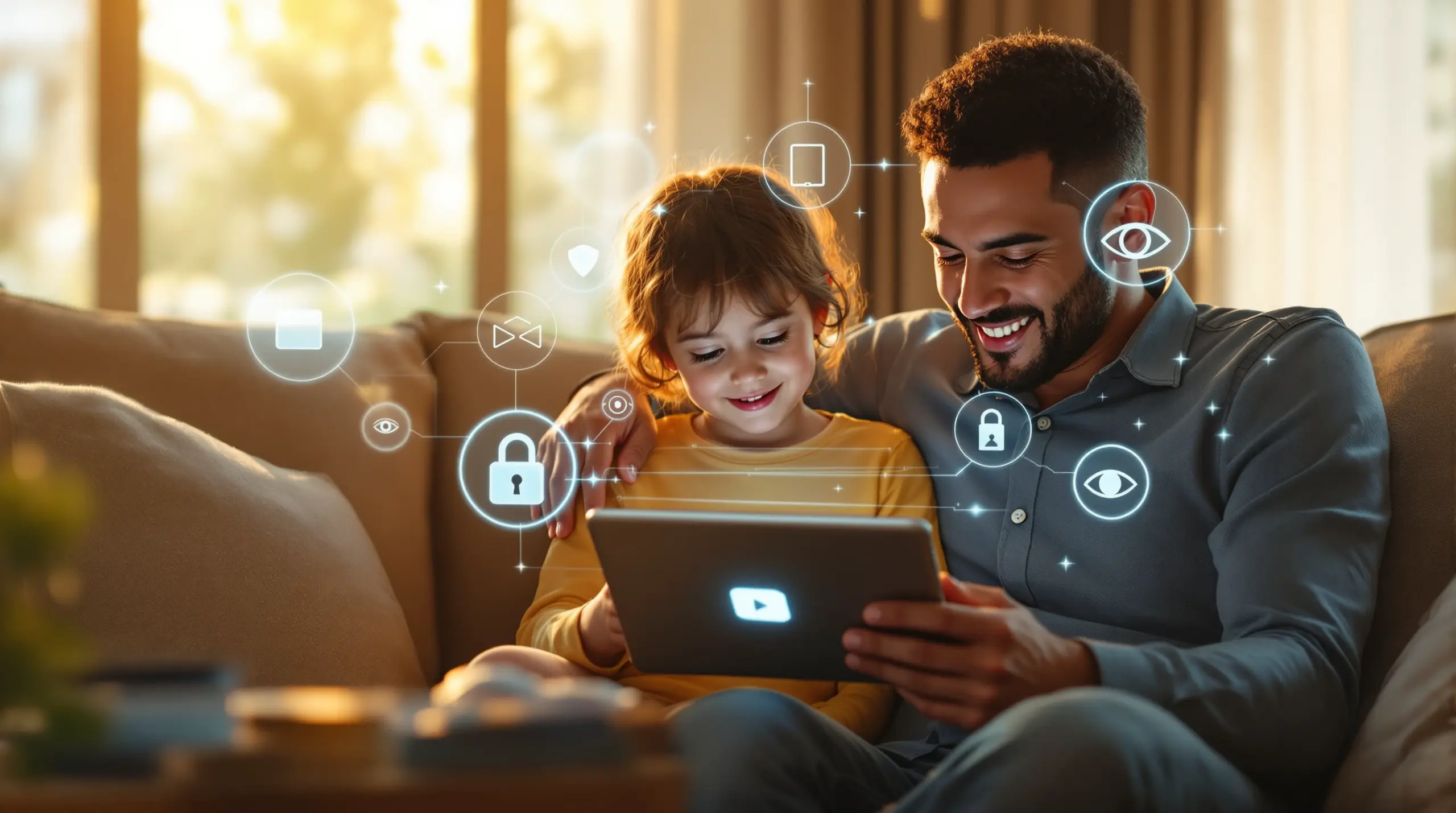
YouTube’s recommendation algorithm is designed to keep viewers engaged, not to filter content by age-appropriateness. That means a child who starts watching a cartoon can follow a chain of recommendations into content that is far beyond what their parents intended. Parental YouTube oversight addresses this by placing a layer of supervision between the child and the platform’s unrestricted content library.
Parents of younger children – especially those aged 8 to 12 receiving their first Android smartphone – are often surprised by how quickly children learn to navigate YouTube independently. Setting up monitoring before a child has free access to the platform is significantly more effective than trying to restrict usage after habits are already formed. The use case for first-device parents is clear: establish safe browsing and YouTube history visibility from day one, so the rules are part of normal device use rather than a later imposition.
Amanda Lenhart, Associate Director of Research at Pew Research Center, reported in July 2020 that “Fully 80% of all parents with a child age 11 or younger say their child ever watches videos on YouTube, with 53% reporting that their child does this daily.” (Pew Research Center, 2020)[1] Those numbers make YouTube oversight one of the most relevant digital safety challenges families face today.
Why Parental YouTube Oversight Matters for Your Family
Parental YouTube oversight matters because the platform’s content moderation cannot reliably protect children from age-inappropriate material, and parents who rely on YouTube alone to filter what their kids watch are taking a significant risk. As of 2020, 46% of parents with a child under 12 who uses YouTube reported that their child had already encountered videos inappropriate for their age (Pew Research Center, 2020).[1] That figure represents nearly half of all families using the platform with young children – a proportion too large to dismiss as an edge case.
The risks go beyond accidental exposure to adult content. YouTube’s autoplay and recommendation features gradually introduce children to increasingly extreme or disturbing content through incremental steps, each video seeming only slightly different from the last. A child watching toy unboxing videos can find themselves watching content featuring violence, horror, or inappropriate language within a single unsupervised session. Research published in PubMed Central in 2024 found that 27% of videos watched by infants and toddlers in one study included physical violence, and 48% included consumerism-focused content (PubMed Central, 2024).[2]
Amanda Lenhart of Pew Research Center also noted in 2020 that “More than four-in-ten parents (46%) say their child age 11 or younger who uses this platform has encountered videos on YouTube that were inappropriate for their age.” (Pew Research Center, 2020)[1] These statistics reinforce why parental oversight of YouTube activity is not an optional extra – it is a core part of responsible digital parenting.
Beyond content safety, unrestricted YouTube access contributes to screen time conflicts, disrupted sleep, and reduced focus during homework and family time. Children who watch unlimited YouTube without boundaries quickly develop habits that are difficult to reverse. Parental YouTube controls that include viewing history monitoring, daily time limits, and scheduled downtime address these behavioral risks alongside the content safety risks, giving families a complete solution rather than a partial one.
YouTube’s own safety team acknowledged in 2023 that “Controls help teach kids how to consume content responsibly, and give parents options to make the right choice for their family.” (YouTube Safety Team, 2023)[4] That statement reflects the platform’s recognition that technology alone cannot replace active parental involvement in managing how children engage with online video.
Built-In Controls vs. Third-Party Apps: What Works Better?
YouTube’s built-in parental controls – including YouTube Kids, supervised accounts, and Restricted Mode – provide a starting point for families, but they have significant limitations that third-party parental control apps are specifically designed to address. Understanding what each approach offers helps parents choose the right combination for their family’s needs.
YouTube Kids is a separate app designed for children under 13, with a curated content library and simplified interface. It blocks most adult content by default and gives parents the ability to approve specific videos or channels. However, YouTube Kids still allows some content that parents find inappropriate, and children who are old enough to want the full YouTube experience will quickly resist being restricted to the Kids app. The platform’s own guidance notes that parents can “review your child’s YouTube watch history in supervised experiences by selecting YouTube History” (Google YouTube Support, 2026)[5], but this requires parents to actively log in and check – it does not proactively alert them to concerning content.
Restricted Mode on the main YouTube app filters out content flagged as inappropriate, but it is not foolproof. Children can turn it off if they have access to the account settings, and it does not prevent access to all content that parents would consider unsuitable. Supervised account features for teens offer more flexibility than YouTube Kids but still rely on the child not actively circumventing the settings.
Third-party parental control apps fill the gaps that YouTube’s own tools leave open. Apps like Boomerang Parental Control – Taking the battle out of screen time for Android and iOS go further by providing YouTube App History Monitoring on Android devices, allowing parents to see exactly what their child searched for and watched in the standard YouTube app – not just in YouTube Kids or supervised accounts. This is a meaningful difference: most families with pre-teens use the full YouTube app, not the Kids version, so monitoring needs to work there.
Third-party apps also enforce controls at the device level rather than the app level, meaning that screen time limits, scheduled downtime, and app blocking apply regardless of which YouTube interface the child uses. A child cannot simply switch from the YouTube Kids app to the standard YouTube app to bypass restrictions when device-level controls are in place. For parents of tech-savvy children – particularly teenagers who have already bypassed simpler controls – device-level enforcement is the only reliable approach. You can read an independent assessment of how Boomerang compares in practice at TechCrunch’s Boomerang Parental Control software review.
How to Monitor Your Child’s YouTube Activity Effectively
Effective parental YouTube monitoring combines technical tools with consistent household rules and open conversations, rather than relying on any single method to do all the work. Parents who layer multiple approaches – platform settings, third-party app monitoring, and scheduled check-ins – achieve better outcomes than those who rely on one tool alone.
YouTube viewing history is the foundation of effective monitoring. On Android devices, Boomerang Parental Control’s YouTube App History Monitoring gives parents visibility into what their child searched for and watched in the standard YouTube app, surfacing content that would otherwise remain invisible. This feature is unavailable on iOS through Boomerang, where support is more limited. Parents can review viewing patterns over time, identify recurring interests that signal developing issues, and use what they find as a starting point for conversations with their child rather than an occasion for punishment.
Keyword awareness is another practical layer of monitoring. On Android, Boomerang’s Call and Text Safety feature sends alerts when inappropriate keywords appear in text messages – a complementary form of oversight that extends beyond YouTube to the broader digital environment. Parents who monitor across multiple channels are less likely to miss warning signs that appear in one area but not another.
Scheduling is equally important. Children who have unlimited access to YouTube at bedtime or during homework develop habits that undermine sleep and academic performance. Automated screen time scheduling – setting firm device-lock times that apply to all apps including YouTube – removes the daily negotiation that exhausts parents and breeds resentment in children. When the device locks automatically at 9 PM, the rule comes from the system, not from the parent, which significantly reduces conflict.
Regular family conversations about what children are watching on YouTube matter as much as any technical control. Children who understand why certain content is restricted and who feel comfortable sharing what they’ve seen online are far more likely to come to a parent when something disturbs them. Parental YouTube oversight works best when the tools support a relationship of trust, not when they replace it. As the Pew Research Center noted in 2020, only about 46% of parents believe YouTube is doing a good or excellent job keeping children safe (Pew Research Center, 2020)[1] – which means the majority of families recognize that they need to take an active role themselves.
Your Most Common Questions
How can I see what my child is watching on YouTube?
On Android devices, Boomerang Parental Control’s YouTube App History Monitoring shows parents exactly what their child searched for and watched in the standard YouTube app – not just in YouTube Kids or supervised account mode. This is an Android-only feature within Boomerang; iOS support is limited. YouTube’s own supervised account settings also allow parents to review watch history by selecting YouTube History in the account settings, but this requires active manual checking and does not send proactive alerts. For the most complete picture, combining YouTube’s built-in supervised account tools with a third-party monitoring app gives parents both reactive review capability and the history detail needed for informed family conversations. Regularly reviewing what your child watches – rather than just blocking content – helps you understand their interests and spot concerns before they escalate.
Is YouTube Kids safe enough for children under 12?
YouTube Kids is safer than the standard YouTube app for children under 12, but it is not completely safe and should not be treated as a substitute for active parental oversight. The platform uses a combination of automated filtering and human review to curate its content library, but age-inappropriate videos have repeatedly slipped through, including content featuring cartoon characters in violent or disturbing scenarios. A 2024 study published in PubMed Central found that only 19% of videos watched by infants and toddlers were age-appropriate (PubMed Central, 2024)[2], illustrating how even well-intentioned filtering falls short. Parents using YouTube Kids should still configure the approved content level within the app, disable search if their child is young enough that curated channels are sufficient, and periodically review what their child has been watching. Pairing YouTube Kids with device-level screen time controls from a third-party parental control app adds an additional layer of protection by limiting total daily viewing time and enforcing bedtime locks regardless of which app the child uses.
Can my child bypass YouTube parental controls?
Yes, children – especially tech-savvy pre-teens and teenagers – can bypass YouTube’s built-in parental controls by switching accounts, turning off Restricted Mode, or simply using a different browser or device. Platform-level controls like Restricted Mode and supervised accounts are only as reliable as the child’s willingness to stay within them. Children who know their parent’s Google account password or have a secondary email address can circumvent supervised account settings entirely. This is why device-level controls from a third-party parental control app are significantly more effective: they enforce restrictions at the operating system level, meaning a child cannot bypass them simply by switching apps or browsers. On Android devices, Boomerang Parental Control’s Uninstall Protection – reinforced by Samsung Knox integration on supported Samsung devices – makes it exceptionally difficult for tech-savvy children to remove the app or change the settings without a parent’s PIN. For parents who have already experienced their child bypassing Google Family Link or Apple Screen Time, device-level enforcement is the most reliable next step.
What is the best way to limit YouTube screen time for kids?
The most effective way to limit YouTube screen time for kids is to set automated daily limits and scheduled device-lock times using a parental control app, so that enforcement is consistent and does not depend on daily parental intervention. Manual time limits – telling a child they can only watch for 30 minutes – consistently fail because they require the parent to monitor and intervene, which creates conflict and is easy for children to manipulate. Automated limits built into a parental control app enforce the rule without the parent needing to be present: when the daily time allowance runs out or the scheduled bedtime arrives, the device locks automatically. On Android devices, Boomerang Parental Control’s Per-App Limits feature allows parents to set specific daily time allowances for YouTube while designating educational apps as Encouraged Apps that remain accessible even after the entertainment time limit is reached. This approach teaches children that screen time has natural limits tied to the schedule rather than to parental mood or availability, which reduces arguments and builds healthier digital habits over time. Pair automated limits with regular history reviews so you can have informed conversations about what your child chose to watch during their allowed time.
Comparing Parental YouTube Control Approaches
Each method of managing a child’s YouTube access has different strengths, and the right choice depends on your child’s age, device type, and how technically sophisticated they are. The table below compares the four most common approaches families use to exercise parental YouTube oversight, so you can see at a glance where each one excels and where it falls short.
| Approach | Viewing History Access | Bypass Resistance | Screen Time Limits | Platform Support |
|---|---|---|---|---|
| YouTube Kids App | Basic watch history (manual check) | Low – child can switch apps | None built-in | Android and iOS |
| YouTube Supervised Accounts | Watch history via account settings[5] | Low – account switching possible | None built-in | Android and iOS |
| Google Family Link / Apple Screen Time | Limited app usage data | Medium – known bypass methods exist | Daily limits available | Android / iOS respectively |
| Boomerang Parental Control (Android) | Full YouTube App History Monitoring | High – Uninstall Protection + Samsung Knox | Per-App Limits + Scheduled Downtime | Android (primary); iOS limited |
How Boomerang Parental Control Helps with Parental YouTube Oversight
Boomerang Parental Control addresses the core parental YouTube challenge that most other tools leave unresolved: knowing what your child actually watches in the standard YouTube app, not just in a curated kids’ version. For Android device families, Boomerang’s YouTube App History Monitoring gives parents a clear record of what their child searched for and watched, enabling informed conversations and early identification of concerning content trends – without requiring parents to physically check the device daily.
Beyond history monitoring, Boomerang’s Boomerang Parental Control screen time features let parents set per-app daily limits specifically for YouTube on Android devices, so children have a defined viewing allowance that enforces itself automatically. When the limit is reached, YouTube locks – no argument, no negotiation. Parents can also designate educational apps as Encouraged Apps that remain accessible even after the YouTube limit runs out, guiding children toward balance rather than simply cutting off all screen time.
Boomerang’s Uninstall Protection – including Samsung Knox integration, the only parental control app to use Samsung’s enterprise mobile security solution – means that tech-savvy children cannot simply delete the app to regain unrestricted YouTube access. This is a critical differentiator for parents of teenagers who have already bypassed simpler controls.
“This is a great application! I have control back over my child’s phone and applications because she managed to circumvent family link. I have no idea how she did that but she managed to find a way, as did other kids. That was a major frustration for us. But now with Boomerang, I can manage her time, what applications she uses and what sites she visits.” – Joe Eagles, Google Play review
“Hey fellow parents, So far this the best parental control app .. hands down. So far the only app my 11 year old was not able to bypass. Big Shout out to developers for making such a great app.” – Jason H, Google Play review
For safe web browsing alongside YouTube management, SPIN Safe Browser provides built-in content filtering that works on any network without VPN setup, available for both Android and iOS. The SPIN Safe Browser integrates with Boomerang so that browser access also respects screen time schedules. Visit the Boomerang Parental Control homepage to explore subscription options, including annual plans for a single device and a Family Pack covering up to 10 child devices. For Android families wanting the full feature set including Call and Text Safety, the sideload download page for Android devices provides access to the complete Boomerang experience. Reach out at [email protected] with any questions about which plan fits your family.
How to Set Up Parental YouTube Controls in 5 Steps
Step 1: Choose the Right YouTube Environment for Your Child’s Age
Children under 10 should use the YouTube Kids app with search disabled and a parent-approved content level set. Children aged 10 to 12 can transition to YouTube supervised accounts, which retain more content while giving parents review access to watch history. Teenagers using the full YouTube app need device-level controls rather than platform-level settings alone, because platform controls are easier to bypass as children grow more technically capable.
Step 2: Install a Third-Party Parental Control App on the Child’s Device
Download and install Boomerang Parental Control on your child’s Android device before handing it to them, so monitoring and limits are active from the first session. On Android, the sideloaded version from the Boomerang website provides the full feature set including YouTube App History Monitoring and Uninstall Protection. iOS support is available but limited to scheduled screen time, location tracking, and SPIN Safe Browser integration.
Step 3: Set a Daily YouTube Time Limit and Scheduled Downtime
On Android, use Boomerang’s Per-App Limits to assign a specific daily viewing allowance to YouTube – 30 to 60 minutes for school nights depending on your child’s age works well as a starting point. Configure Scheduled Downtime to lock the device automatically at bedtime and during homework hours. Designate educational apps as Encouraged Apps so children retain access to school tools even when their entertainment time runs out.
Step 4: Enable YouTube App History Monitoring and Review It Regularly
Activate Boomerang’s YouTube App History Monitoring on Android to receive a record of what your child searched for and watched in the standard YouTube app. Set a weekly calendar reminder to review the history – not to interrogate your child, but to stay informed about their interests and spot any content patterns that concern you. Use what you find as a prompt for relaxed, curious conversations rather than reactive confrontations.
Step 5: Have an Ongoing Family Conversation About YouTube Rules
Tell your child upfront that YouTube history is monitored and explain why – framing it as a safety measure rather than surveillance builds more trust than discovering controls secretly. Revisit the rules every few months as your child grows and earns more independence. Gradually loosening specific restrictions in response to responsible behavior teaches self-management, which is the long-term goal of parental YouTube oversight.
The Bottom Line
Parental YouTube oversight is one of the most practical and impactful steps families can take to protect children’s online safety and support healthier screen habits. With 80% of children under 12 watching YouTube and nearly half having already encountered inappropriate content (Pew Research Center, 2020)[1], relying on the platform alone to keep kids safe is not a realistic strategy. The most effective approach combines YouTube’s built-in supervised settings with device-level controls from a dedicated parental control app, automated time limits that enforce themselves, and regular history reviews that keep parents informed without requiring constant manual checking.
Boomerang Parental Control gives Android families the tools to do all of this in one place – YouTube App History Monitoring, per-app daily limits, Uninstall Protection, and scheduled downtime – so that parental YouTube management becomes a background system rather than a daily battle. Ready to take control? Visit useboomerang.com or email [email protected] to get started today.
Sources & Citations
- Parental views about YouTube. Pew Research Center.
https://www.pewresearch.org/internet/2020/07/28/parental-views-about-youtube/ - YouTube content analysis study. PubMed Central.
https://pmc.ncbi.nlm.nih.gov/articles/PMC11583682/ - YouTube Statistics 2026. Hootsuite.
https://blog.hootsuite.com/youtube-statistics/ - YouTube Safety Update: New Parental Controls for Teens. YouTube Official Blog.
https://blog.youtube/news-and-events/updates-youtube-supervised-accounts-teens/ - Parental controls & settings for supervised kid accounts on YouTube. Google YouTube Support.
https://support.google.com/youtubekids/answer/13877231?hl=en&co=GENIE.Platform=Android
START YOUR FREE TRIAL
Take control of screen time—free for 14 days, cancel anytime.
