
01
Jul
2026
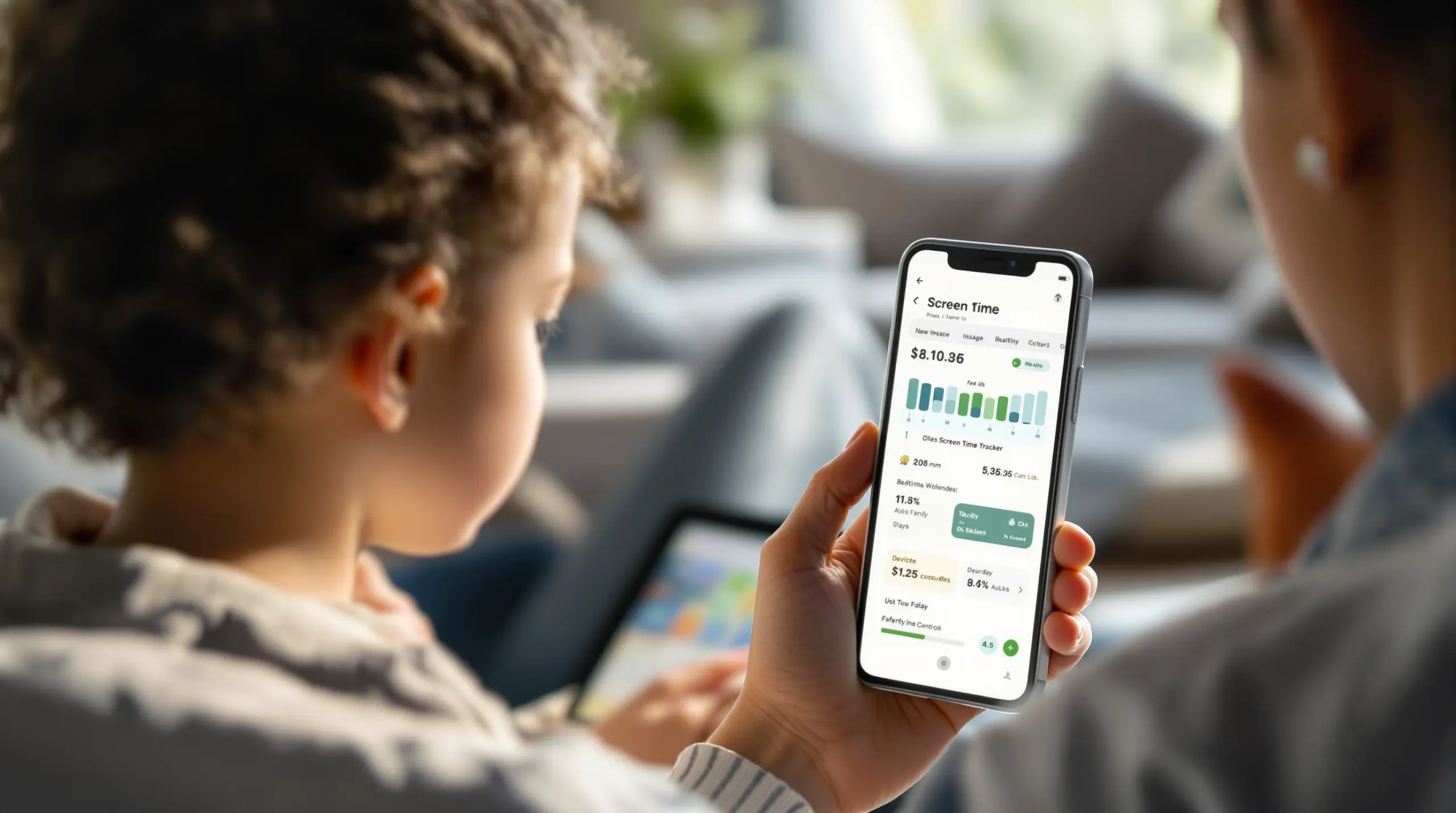
Best Screen Time Tracker App for Kids in 2025
July 1, 2026
A screen time tracker app helps parents monitor, limit, and manage how long children spend on devices – discover how to choose the right tool to protect your child’s health, safety, and sleep in 2025.
Table of Contents
- What Is a Screen Time Tracker App?
- Why Screen Time Tracking Matters for Kids
- Key Features to Look for in a Screen Time Tracker App
- Android vs. iOS: What Parents Need to Know
- Frequently Asked Questions
- Comparing Screen Time Management Approaches
- How Boomerang Parental Control Helps Families
- Practical Tips for Managing Screen Time
- The Bottom Line
- Sources & Citations
Article Snapshot
A screen time tracker app is a parental monitoring tool that records, limits, and schedules children’s device usage across apps and browsers. The right app combines automated daily limits, content filtering, and tamper-proof enforcement to reduce family conflict and protect children online – without requiring parents to police devices manually every day.
Quick Stats: screen time tracker app
- Children and adolescents ages 8 to 18 spend an average of 7 hours and 22 minutes per day on screen media entertainment (Common Sense Media, 2019)[1]
- Tweens and teens spend more than 8 hours per day on entertainment screen media, excluding schoolwork (Common Sense Media, 2023)[2]
- The CDC states that excessive screen time is associated with less physical activity and more sedentary time (Centers for Disease Control and Prevention, 2024)[3]
- The American Academy of Pediatrics recommends creating a Family Media Use Plan for every household (American Academy of Pediatrics, 2016)[4]
What Is a Screen Time Tracker App?
A screen time tracker app is a dedicated parental control tool that records how long a child spends on each app, game, or website – and lets parents set firm limits, schedules, and content filters from a separate parent device. Unlike built-in phone settings, a purpose-built tracker gives you automated enforcement, tamper protection, and daily activity reports without requiring you to pick up your child’s device every evening. Boomerang Parental Control has helped families manage digital balance since 2015, combining screen time tracking with safety features purpose-built for Android and iOS households.
At its core, a screen time management app records app-by-app usage data and surfaces it in a parent dashboard. From there, you can set a total daily limit – say, two hours of entertainment apps – and schedule automatic device lockdowns for bedtime or homework time. When the limit is reached, the device locks without you having to intervene. That automated enforcement is what separates dedicated tools from simply trusting a child to self-regulate.
START YOUR FREE TRIAL
Take control of screen time—free for 14 days, cancel anytime.




Modern trackers also go well beyond time counting. The best apps layer in content filtering, app approval workflows, and location tracking, turning a simple usage logger into a comprehensive family safety platform. For parents handing a child their first smartphone, this full-stack approach means you can set healthy habits from day one rather than trying to correct bad patterns after they form.
Common Sense Media research found that tweens and teens spend more than 8 hours per day on entertainment screen media, excluding schoolwork (Common Sense Media, 2023)[2]. That figure underscores why passive monitoring is not enough – families need tools that actively enforce the boundaries parents set.
Why Screen Time Tracking Matters for Kids’ Health and Safety
Screen time tracking is important because unchecked device use has measurable effects on children’s sleep, physical activity, and wellbeing. The Centers for Disease Control and Prevention is direct on this point: “Excessive screen time can lead to less physical activity and more sedentary time” (Centers for Disease Control and Prevention, 2024)[3]. A digital wellness tool that enforces daily limits addresses this risk at the source, rather than leaving it to willpower alone.
Sleep disruption is one of the most immediate consequences parents notice. Children who use devices late at night – especially with no automated lock engaging – get less sleep, which affects mood, school performance, and physical health. A well-reviewed parental control app with scheduled downtime removes the bedtime argument entirely: the phone locks at the time you set, and that is the end of the negotiation.
Online safety is the second pillar. Children exploring the internet without content filtering are one search away from encountering adult material, violent content, or contact from strangers. A child activity monitor that includes web filtering, app approval control, and keyword alerts in text messages addresses these risks before they escalate. This is particularly important for parents of pre-teens receiving their first device, where establishing safe habits from the start is far easier than correcting them later.
The American Academy of Pediatrics put it clearly in its clinical guidance: “Media use plans help families decide when, where, and how media is used” (American Academy of Pediatrics, 2016)[4]. A screen time tracker app is the practical tool that turns that advice into automatic, consistent enforcement – giving parents a reliable structure instead of daily conflict.
Physical safety is the third dimension. Real-time location tracking and geofencing alerts let parents confirm a child arrived at school or a friend’s house without relying on the child to remember to text. When all three elements – time management, content safety, and location assurance – are combined in one platform, families gain a level of oversight that no single built-in phone control can match.
Key Features to Look for in a Screen Time Tracker App
The most effective screen time tracker apps combine automated enforcement with visibility tools, so parents spend less time policing devices and more time having informed conversations. Knowing which features genuinely matter helps you avoid paying for extras you will never use while ensuring the protections your family needs are in place.
Automated daily limits and scheduled downtime are the foundation. Look for an app that lets you set a total daily usage allowance and separate lock schedules for bedtime and homework time. The device should lock automatically when the limit is reached – no parent intervention required. This is what eliminates the daily argument, because the app becomes the neutral enforcer instead of you.
Per-app controls and encouraged apps add meaningful nuance on Android devices. Rather than treating all screen time equally, the best apps let you cap entertainment apps at 30 minutes while exempting educational tools from counting toward the daily limit at all. This approach teaches children that not all screen time is the same – a key step in building long-term digital wellness habits.
Content filtering and safe browsing protect children from inappropriate websites without requiring router configuration or VPN setup. The SPIN Safe Browser is a purpose-built example: it blocks millions of harmful websites and enforces strict SafeSearch on all major search engines, working on any network the device joins – home wifi, mobile data, or a school connection.
App approval and discovery control prevent new, risky apps from landing on a child’s device without parental sign-off. When a child attempts to install any app, the parent receives an alert and must approve it before it becomes usable. This gate-keeping function is especially valuable when handing a child their first device.
Uninstall protection is the feature that separates serious parental control apps from tools a tech-savvy child can defeat in five minutes. If a child can simply delete the app, every other feature becomes meaningless. Look for a solution that uses device-level security – on Samsung Android devices, Knox integration makes removal virtually impossible without the parent’s PIN.
Visibility tools round out the package. YouTube viewing history monitoring (available on Android), call and text logs, and daily emailed activity reports let parents stay informed without hovering over a child’s shoulder or logging into the app constantly. These insights open the door to productive conversations about what children are watching and who they are talking to.
Android vs. iOS: What Parents Need to Know About Screen Time Apps
Platform choice has a direct impact on how much control a screen time tracker app can give you, and Android provides deeper parental oversight than iOS when using a dedicated third-party app. This is not a marketing claim – it reflects how each operating system grants permission to third-party developers.
On Android, a dedicated parental monitoring app can access app-by-app usage data, monitor YouTube viewing history, log call and SMS activity, enforce per-app time limits, and integrate with Samsung Knox for tamper-proof uninstall protection. These capabilities exist because Android gives authorized apps the system-level permissions needed to enforce rules at the device level rather than just the browser level.
iOS is more restrictive by design. Apple limits what third-party apps can see and control, which means most iOS parental control features are lighter than their Android equivalents. On an iPhone or iPad, a parental control app enforces scheduled downtime and content filtering through a browser, provides location tracking, and sends tamper notifications – but it cannot monitor the YouTube app directly, log SMS messages, or enforce per-app time limits the way Android can.
This distinction matters when parents choose a device for their child. If deep visibility and tamper-proof enforcement are priorities – particularly for a pre-teen receiving their first phone – an Android device managed with a purpose-built app delivers significantly more control. Families already in the Apple ecosystem can still benefit from a third-party screen time app for iOS, particularly for content filtering and scheduled downtime, but should understand the feature ceiling that Apple’s platform imposes.
The Boomerang Parental Control review on SafeWise covers the platform differences in practical detail, giving parents a clear picture of what to expect on each device type before they commit to a setup.
Your Most Common Questions
What is the best screen time tracker app for Android?
The best screen time tracker app for Android combines automated daily limits, per-app controls, content filtering, and uninstall protection in one platform. On Android, you have access to the deepest feature set because the operating system allows third-party apps to enforce rules at the device level. Key things to look for include scheduled downtime that locks the device automatically at bedtime, the ability to set individual time caps for entertainment apps while exempting educational tools, and tamper-proof enforcement that prevents a child from simply deleting the app. For Samsung Android devices specifically, Knox integration adds an additional layer of enterprise-grade security that makes circumvention exceptionally difficult. YouTube viewing history monitoring is another Android-exclusive feature worth prioritizing, since it gives parents visibility into one of the most-used apps on any child’s device without requiring the child to use a separate filtered browser.
Can a screen time tracker app work on both Android and iOS?
Yes, most dedicated parental control apps support both Android and iOS, but the feature set differs significantly between platforms. On Android, you get full access to per-app controls, YouTube history monitoring, SMS and call logging, and uninstall protection. On iOS, Apple’s restrictions limit third-party apps to scheduled screen time, location tracking, content filtering through a dedicated browser, and tamper notifications. If your household includes both Android and iOS child devices, a cross-platform app like Boomerang Parental Control lets you manage everything from one parent dashboard – you just need to be aware that the iOS child device will have a lighter feature set than an Android one. For content filtering specifically, the SPIN Safe Browser works on both platforms and provides consistent safe browsing protection regardless of whether the child’s device is Android or iOS.
How do screen time tracker apps prevent kids from bypassing controls?
Bypass prevention is one of the most important factors to evaluate when choosing a device usage monitor for older children or tech-savvy teens. Basic free tools like Google Family Link or Apple Screen Time are often defeated by a determined child – either by uninstalling the app, resetting the device, or finding system-level workarounds. Dedicated third-party apps address this through uninstall protection that requires a parent PIN to remove the app, and on Samsung Android devices, Knox integration ties the parental control app to the device’s firmware layer, making removal virtually impossible without factory resetting the phone. App approval workflows also prevent children from installing alternative browsers or VPN apps that could be used to bypass content filters. If your child has already bypassed simpler controls, this level of tamper-resistant enforcement is the specific feature set to prioritize when choosing a replacement app.
Are screen time tracker apps worth it for teenagers?
Screen time tracker apps are especially valuable for teenagers, though the approach shifts from pure restriction toward guided accountability. Teens who have outgrown simpler controls need a tool that enforces limits reliably while giving parents visibility into communication risks like cyberbullying or contact from unknown adults. Automated scheduling is particularly effective for teenagers because it removes the parent from the role of daily enforcer – the app handles the lock, which reduces the confrontation that makes screen time management so exhausting with older kids. Call and text safety monitoring on Android devices surfaces keyword alerts from messages, letting parents spot potential issues early without reading every conversation. Location tracking with geofencing provides passive physical safety confirmation without requiring the teen to check in constantly. The U.S. Surgeon General has noted that the evidence on specific screen time thresholds is still evolving (U.S. Surgeon General, 2023)[5], which is why tools that encourage balance rather than blanket restriction work better with teenagers long-term.
Comparing Screen Time Management Approaches
Not all approaches to managing a child’s device usage deliver the same level of protection or convenience. The table below compares four common methods across the factors that matter most to parents – enforcement reliability, depth of visibility, ease of setup, and bypass resistance.
| Approach | Enforcement Reliability | Visibility Depth | Bypass Resistance | Setup Complexity |
|---|---|---|---|---|
| Built-in OS tools (Google Family Link, Apple Screen Time) | Moderate – basic time limits and app blocking | Low – limited usage data, no YouTube history | Low – frequently bypassed by tech-savvy kids | Low – simple but limited |
| Dedicated screen time tracker app (e.g., Boomerang) | High – automated limits, schedules, Knox integration on Samsung[6] | High – per-app data, YouTube history (Android), call/SMS logs (Android) | High – uninstall protection, parent PIN required | Low-Medium – guided setup, runs automatically |
| Router-based controls | Moderate – blocks at network level only | Low – no app-level data | Low – bypassed by mobile data or external wifi | High – requires technical network configuration |
| No controls (trust-based only) | None – fully reliant on child self-regulation | None | None | None |
How Boomerang Parental Control Helps Families Manage Screen Time
Boomerang Parental Control is built specifically to solve the problems families face every day – screen time battles, online safety worries, and the frustration of watching a child bypass the controls you worked hard to set up. As an Android-first parental control app, Boomerang gives parents a level of device oversight that built-in OS tools and many competitors simply cannot match.
The app’s screen time features let you set a total daily usage limit and schedule automatic lockdowns for bedtime, homework, and mealtimes – all from your own phone. When time is up, the child’s device locks without any input from you. You can also designate educational apps as “Encouraged,” so they never count against the daily limit, guiding children toward balanced device use rather than pure restriction.
For families with Samsung Android devices, Boomerang is the only parental control app to use Samsung Knox – an enterprise-grade security layer pre-installed on most Samsung smartphones and tablets. This makes the app virtually impossible for a child to remove without the parent’s PIN, solving the single biggest frustration parents of tech-savvy kids report.
On Android, deeper visibility tools include YouTube App History Monitoring, Call and Text Safety with keyword alerts, and App Discovery and Approval control that requires your sign-off before any new app can be used. iOS support is available with scheduled downtime, location tracking, and SPIN Safe Browser integration, though the deeper Android-only features are not available on iPhone or iPad child devices.
“So far this the best parental control app .. hands down. So far the only app my 11 year old was not able to bypass. Big Shout out to developers for making such a great app.” – Jason H, Google Play review
“I have control back over my child’s phone and applications because she managed to circumvent family link. I have no idea how she did that but she managed to find a way, as did other kids. That was a major frustration for us. But now with Boomerang, I can manage her time, what applications she uses and what sites she visits.” – Joe Eagles, Google Play review
Subscriptions are available annually for a single device or as a Family Pack covering up to 10 child devices. Visit the Android download page to get started, or reach out at [email protected] with any questions.
Practical Tips for Using a Screen Time Tracker App Effectively
Setting up a screen time app is only the first step. How you use it day-to-day determines whether it actually improves your family’s digital habits or becomes another source of conflict. These practical guidelines help you get the most from your chosen tool.
Set expectations before you set limits. Before activating any restrictions, sit down with your child and explain what you are putting in place and why. Children who understand the reasoning behind limits – better sleep, more focus, time for other activities – are more likely to accept them than children who simply find their phone locked one day without explanation. Frame the conversation around wellbeing, not punishment.
Start with schedules, then add limits. Automated bedtime and homework lockdowns deliver immediate, tangible benefits and are easy to explain to a child. Once those routines are established, add per-app daily limits for specific entertainment apps. This graduated approach is less overwhelming for both parents and children than activating every feature at once.
Use “Encouraged Apps” to reward positive choices. Designating educational or health apps as always-available signals to your child that not all screen time is equal. It teaches a valuable distinction between productive and passive device use – a lesson that serves them well into adulthood.
Review activity reports weekly, not daily. Daily emailed reports give you a snapshot of usage without requiring you to log in constantly. Set aside ten minutes each week to review patterns and identify any conversations worth having. If YouTube history monitoring surfaces content you want to discuss, approach the conversation with curiosity rather than accusation.
Keep uninstall protection active at all times. This is non-negotiable for households with tech-savvy children or teenagers. A child who knows the app can be removed will test that boundary. Keeping tamper protection enabled – and for Samsung device owners, ensuring Knox integration is active – means your rules stay in place regardless of what your child attempts.
Revisit limits as children get older. A screen time schedule that works for a 10-year-old needs adjustment for a 14-year-old. Use the app’s flexibility to loosen individual app limits as your child earns trust, framing increased freedom as a privilege tied to responsible behaviour rather than an automatic right.
The Bottom Line
A screen time tracker app is one of the most practical tools parents have for protecting children’s health, sleep, and online safety in a device-driven world. The right app combines automated enforcement, content filtering, and tamper-proof controls so that limits stick without turning every evening into a negotiation. For Android households, the depth of control available through a dedicated parental monitoring app far exceeds anything a built-in OS tool can offer.
Boomerang Parental Control brings together daily limits, bedtime scheduling, YouTube history monitoring, location tracking, and Samsung Knox-backed uninstall protection in a single platform designed for real families – not IT departments. Whether you are setting up a first device for a pre-teen or replacing a tool your teenager has already bypassed, Boomerang gives you the enforcement reliability and visibility you need.
Ready to take the battle out of screen time? Visit useboomerang.com or email [email protected] to learn more and start your free trial today.
Sources & Citations
- The Common Sense Census: Media Use by Kids Age Zero to Eight. Common Sense Media, 2019.
https://www.commonsensemedia.org/research/the-common-sense-census-media-use-by-kids-age-zero-to-eight-2019 - The Common Sense Census: Media Use by Tweens and Teens, 2021. Common Sense Media, 2023.
https://www.commonsensemedia.org/research/the-common-sense-census-media-use-by-tweens-and-teens-2021 - Screen Time and Children. Centers for Disease Control and Prevention, 2024.
https://www.cdc.gov/physicalactivity/basics/children/screen-time.html - Media and Young Minds. American Academy of Pediatrics, 2016.
https://publications.aap.org/pediatrics/article/138/5/e20162591/52672/Media-and-Young-Minds - Social Media and Youth Mental Health Advisory. U.S. Surgeon General, 2023.
https://www.hhs.gov/surgeongeneral/priorities/youth-mental-health/social-media/index.html - Boomerang Parental Control Samsung Knox Information. Boomerang Parental Control.
https://useboomerang.com/boomerang-parental-control-samsung-knox-information/
START YOUR FREE TRIAL
Take control of screen time—free for 14 days, cancel anytime.
